
Can artificial intelligence learn to joke like a human and trigger genuine laughter
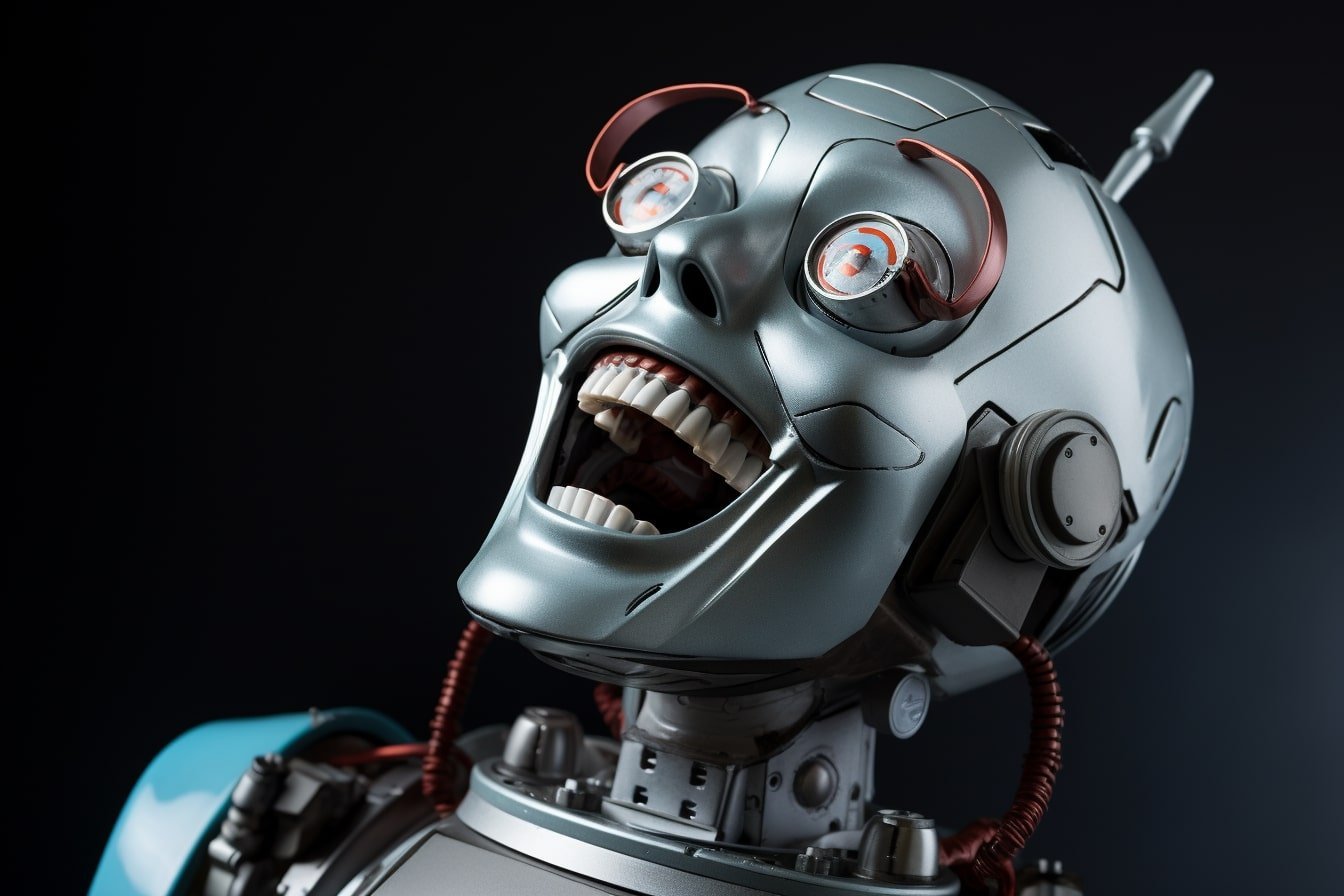
Laughter is an ancient social phenomenon that philosophers, scientists and poets of different eras have long sought to understand. But today the question sounds different: can artificial intelligence learn to grasp humor on a human level and become a conversation partner who not only flawlessly cites jokes but also makes appropriate remarks in a wide range of situations? Why is humor becoming a crucial element in the development of communication technologies, and is there a chance that machines will one day master this unique tool of human interaction?
Why artificial intelligence needs humor
Humor occupies a special place in human life. It helps defuse tension in a difficult conversation, befriend a stranger, ease awkwardness, or strengthen team spirit. Social psychologists argue that laughter and wordplay are not only a form of entertainment but also a deeply rooted mechanism for building trust and exchanging emotions.
For artificial intelligence, humor becomes not just a trendy enhancement but an important component of modern interaction. Virtual assistants, chatbots and even companion robots with a sense of humor are perceived as more “human,” evoke sympathy and encourage more open communication. For example, in online therapy, where AI systems offer support to users, the ability to make a joke at the right moment helps reduce anxiety and create an atmosphere of safety.
Humor is also used in professional settings: recent studies by the University of Southern California show that humorous self-promotion helps job seekers pass interviews more successfully, and entrepreneurs — persuade investors to support their projects. It is no coincidence that modern AI systems are learning to insert appropriate jokes, puns and ironic remarks into emails, advertising texts and even workplace discussions.
How artificial intelligence learns to joke
The first attempts to teach artificial intelligence to create jokes puzzled experts. For a long time, intentional humor was considered a domain traditionally seen as uniquely human. However, with the development of large language models (LLM), the situation began to change.
A striking example is the experience of well-known screenwriter Joe Toplyn, who spent many years analyzing comedic formulas and teaching students to write original jokes. He decided to combine professional comedy-writing algorithms with the capabilities of LLMs and created a web application called Witscript, capable of generating jokes and puns on a given topic. As part of an experiment, Toplyn organized a “battle” between himself and Witscript: both wrote jokes on the same topics, and then comedian Mike Perkins performed them before a live audience. An analysis of the length and loudness of the laughter showed that the audience reacted to the AI’s material just as energetically as to human-written jokes — this result was presented at an international symposium on computational humor.
In other studies, such as the work of psychologist Drew Gorenz from the University of Southern California, language models successfully imitated the satirical style of popular publications. In a survey of two hundred readers, headlines created by AI were rated on par with those written by professional satirical journalists.
Large language models such as ChatGPT are trained on massive bodies of text, including jokes, memes and puns. They can detect patterns of comedic writing, select the right words and sometimes even surprise with an unconventional line of thinking. This is made possible by complex algorithms that analyze context, compare semantic layers and select unexpected linguistic twists.
Scientific theories of humor and their application in AI
Why do people laugh, and how can one distinguish something truly funny from something trivial? Philosophers and scientists have tried to answer this question for centuries. Plato and Descartes, for example, linked humor to a sense of superiority, whereas Herbert Spencer and Sigmund Freud viewed laughter as a reaction to the unexpected or the violation of expectations.
Modern theories focus on the idea of surprise and the resolution of ambiguity. The human brain responds with laughter when confronted with a situation where familiar frames are broken in a witty way. For example, in the joke “Two little fish in an aquarium. One says to the other: ‘You shoot, I’ll drive,’” the humor relies on the ambiguity of the word “aquarium,” which can also mean a military tank.
In machine learning, these concepts are formalized through algorithms for analyzing text, identifying structural incongruities and patterns that often appear in human jokes. Joe Toplyn’s team, for example, broke the process of creating a joke down into clear steps — from choosing key words to constructing an unexpected punchline. Researchers note that modern LLMs are able to recognize such patterns, but their success is still limited to certain genres where the structure is clear and easy to model.
Boundaries and limitations: what AI still lacks in mastering humor
Despite significant progress, artificial intelligence faces a number of obstacles. One of the main problems is the lack of understanding of context, social norms and implicit meanings. Human humor often relies on irony, sarcasm or references that are difficult for a machine to grasp.
Experts such as Christian Hempelmann from the University of Texas point out that even the most advanced algorithms do not understand why and when a joke is appropriate. In experiments involving the generation of visual jokes, AI often defaulted to stereotypes: it produced images where the “humor” was based on people’s physical traits, which leads to risks of discrimination and the reinforcement of biases.
Another future challenge is the unpredictability of quality. Researcher Julia Rays notes that most AI-generated jokes remain mediocre, and creating a strong selection of jokes requires manual work by experts who filter out unsuccessful or inappropriate options. Selection and editing remain an inherently human task, as only a person can take into account audience reactions and specific characteristics of their perception.
This raises the question: can AI not only create witty lines but also understand emotional consequences, avoid offensive themes, or use humor in a way that brings people together rather than divides them? For now, this remains beyond the reach of current algorithms.
Material prepared with the support of https://andarbahar.com.in/