
Why British improv comedy is once again playing to sold-out crowds and surprising audiences
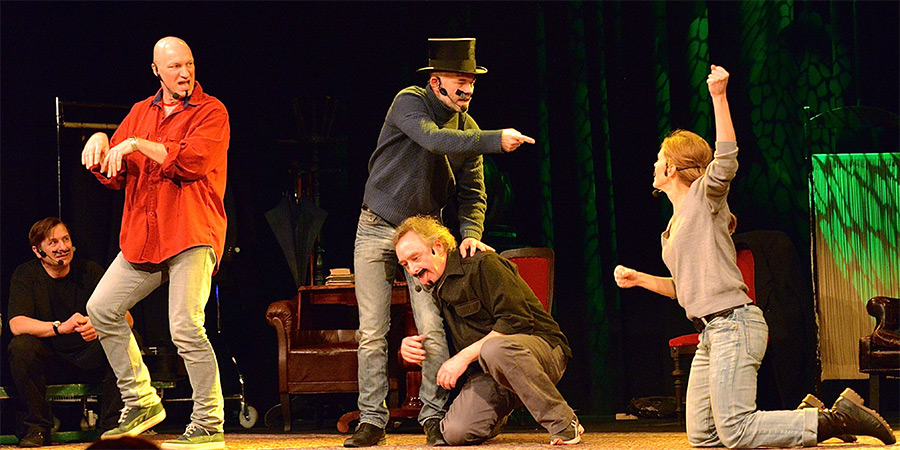
For a long time, improvisational comedy in Britain was considered somewhat second-rate, and its fans were often seen as eccentrics. However, in recent years, the situation has radically changed: venues are filling up again, and new-generation stars are appearing on stage. Why has a genre that was once avoided and even mocked suddenly found itself at the center of cultural attention? Could this surge in popularity be accidental, or does it reflect a deeper shift in the perception of humor and entertainment?
How improv in Britain went from outcast to trend
Improv comedy has always remained on the periphery of the British scene. While stand-up and sketch shows were considered the pinnacles of comedic mastery, improv was subjected to ridicule. Until the 1990s, the genre hardly ever made it to big stages, and its performers played before small groups of enthusiasts.
The situation changed after the appearance of the cult TV show Whose Line Is It Anyway? on Channel 4. This show brought improv to a national level and demonstrated that humor created right before the audience’s eyes could be exciting and in demand. However, after the program ended, the genre once again faded into the background. Experts from comedy collectives such as Free Association note that many colleagues in the field perceived improv as the “ugly stepchild” in the family of British humor, quoting FA founder Graham Dickson.
Why the improv genre remained in the shadows for so long
For many viewers, improv comedy is associated with awkwardness, fear of failure, and a sense of “amateurism.” The very format seems risky: the audience worries whether the performers will be able to come up with something truly funny on the spot. Kiell Smith-Bynoe, a leading performer in modern improv shows, recalls that his friends ask, “What if you run out of ideas?”—but he approaches these risks with confident ease.
Sam Russell from the troupe Shoot from the Hip notes similar problems: if an audience member once sees an unsuccessful performance, they may forever lose interest in the genre. This distinguishes improv from stand-up, where a comedian’s failure is seen as an isolated case, not a judgment on the entire discipline. In the eyes of the public, improv sometimes appears too “geeky,” closed-off, and incomprehensible, which created a vicious circle of unpopularity.
New generation stars and their contribution to popularization
A turning point was the emergence on stage of vibrant actors known far beyond the world of improv. Kiell Smith-Bynoe, who rose to fame after the series Ghosts and Stath Lets Flats, and Ambika Mod, star of the Netflix project One Day, regularly perform in live improv shows. Their popularity attracts a new, young audience, and events become sold-out occasions. According to Kool Story Bro organizers, the number of spectators and ticket sales has increased several times compared to previous seasons.
Shows often invite celebrity guests, including TV presenters and musicians. This allows for the creation of unique formats: for example, scenes are played out based on a story told by a famous person right on stage. This approach breaks stereotypes about the predictability and amateurish nature of the genre, and also introduces an element of unpredictability and live contact between performers and the audience.
What Britain is learning from the American experience
In the US, improv has long been a star factory: troupes like Second City, Groundlings, and Upright Citizens Brigade have produced future comedy titans. Among their alumni are John Belushi, Tina Fey, Will Ferrell, and many others. Improv institutions often become the foundation of acting skills and a launching pad for careers in film and television.
British studios, such as Free Association, are adopting this model. Graham Dickson, inspired by his studies in Chicago, created a structure in London that combines training, practice, and support for young talent. Ambika Mod says that after university, classes at FA became “a kind of drama school” for her: here, they teach you to listen to your partner, react quickly to changes in the situation, create vivid characters, and make bold, logical decisions on stage. As the performers themselves admit, this experience helps them in other areas of show business as well.
The influence of social media and new media on the improv scene
New technologies and media platforms have radically changed attitudes toward improv. Videos of live performances quickly spread on TikTok and YouTube, and individual acts receive hundreds of thousands of views. The troupe Shoot from the Hip notes that their TikTok followers have exceeded 1.8 million people—a record for the genre.
In the digital age, the phenomenon of crowd work is gaining popularity—a format in which comedians spontaneously interact with the audience. Kiell Smith-Bynoe explains that viewers especially enjoy the sense of “here and now”: the audience is amazed at how performers come up with jokes right in real time. Unlike stand-up comedians, who have to protect their material so as not to reveal it in advance, improv performers make every act unique and never repeated.
Such interaction with the audience also solves a problem that is relevant to almost all modern stage performances. The issue is that viewers often “switch off” from what is happening, as all their attention is focused on their smartphone. Many people simply cannot imagine spending time without a gadget.
They use it even at plays and performers’ shows, and not just to take photos or videos. Audience members simply scroll through their social media feeds, watch videos, and even play mobile games. Some of them get distracted from what’s happening on stage in order to spin the reels of slot machines in online casinos.
Gambling entertainment has indeed become popular and it is easy to get addicted to it. Gaming platforms use a wide range of tools to attract visitors’ attention. For example, a new guest can receive no deposit bonuses. As shown by data from this link, which is confirmed by analytics and surveys, the use of no deposit bonuses is one of the most common ways to attract guests to online casinos. If, after this, they become loyal customers, they often strive to play wherever possible.
However, in the case of theatrical performances, concerts, and live comedy shows, the smartphone is an obstacle to perceiving what is happening. Interaction with the audience allows improv performers to switch viewers’ attention from gadgets to the stage.
New formats and the future of the genre: return to television and audience expansion
Modern audiences gravitate toward authenticity and live communication, growing tired of excessively polished humor on the internet. Improv, thanks to its spontaneity and uniqueness, becomes a breath of fresh air for many. Troupe leaders and producers are discussing the possibilities of returning the genre to television. Members of Shoot from the Hip say the goal is to create a new TV project that can attract a young audience.
However, among professionals, skeptics remain who believe that the success may be short-lived. Some critics fear that as the genre grows in popularity, it will lose its uniqueness or turn into a conveyor belt of meanings. Nevertheless, the general mood in the industry gives reason for optimism: improv comedy has proven its flexibility and ability to change with the times.
Transitioning from a marginal phenomenon to a mass trend, British improv comedy is becoming one of the most dynamic and talked-about parts of modern culture. Its future depends on balancing traditions, experimentation, and the expectations of a new audience—but it is already clear that improv has ceased to be the “ugly stepchild” of British humor.